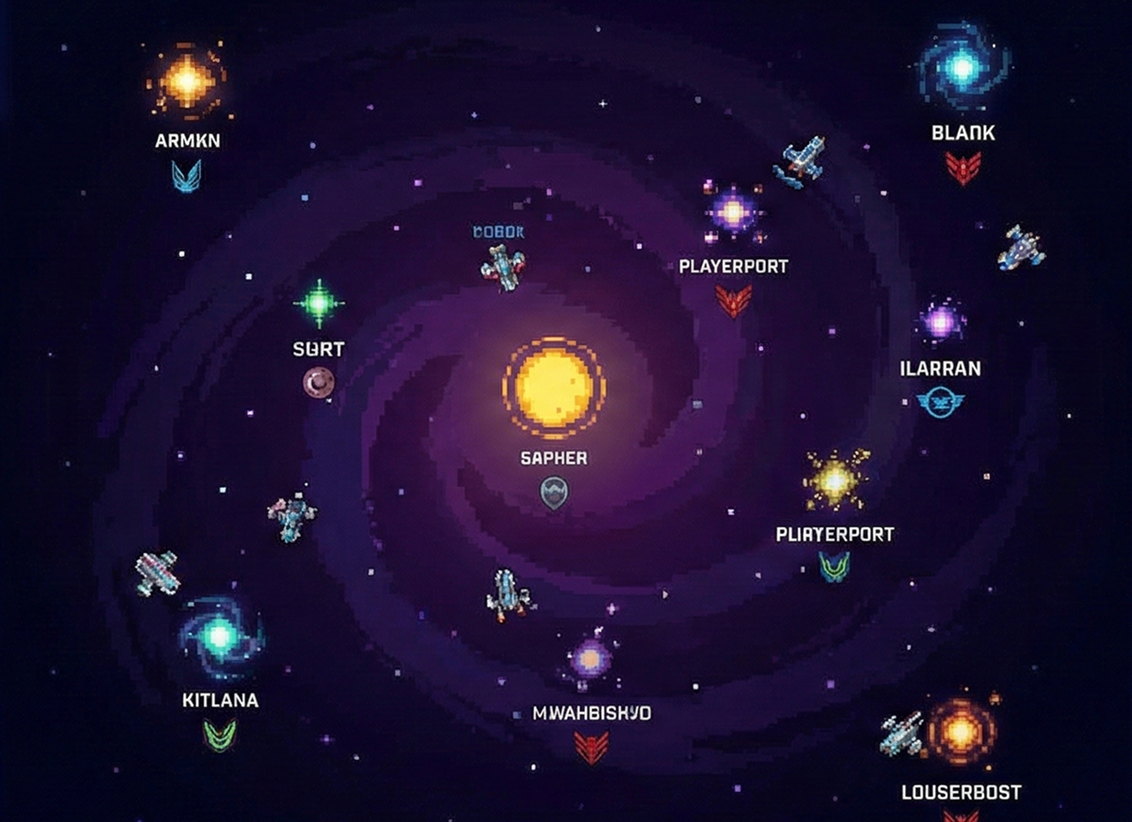
Space Game - Web3 Multiplayer Gaming with NFT-Based Asset Ownership hero image
GamingOverview

Space Game

Web3 Multiplayer Gaming with NFT-Based Asset Ownership

TL;DR

01

Built a fully playable Web3 multiplayer game from the ground up, combining NFT-based spaceship ownership with real-time competitive gameplay and territory control.

02

Designed and deployed Polygon smart contracts powering an in-game shop and marketplace, with spaceships tradeable on OpenSea and Token Runners.

03

Created an XP and token reward system that drives player retention through seasonal events and player-owned progression, establishing a new model for social gaming in Web3.

The Challenge

Web3 gaming in its early years was dominated by speculation rather than fun. Most NFT games prioritized asset trading over actual gameplay, leaving players with tokens and JPEGs but no compelling reason to return. The challenge was to build something genuinely playable: a game where blockchain mechanics enhanced the experience rather than defining it.

AE Studio set out to design Space Game as an internal project exploring what a well-crafted Web3 game could look like. The goal was to merge competitive multiplayer gameplay with real asset ownership, creating a social gaming experience where the blockchain layer added meaningful stakes without getting in the way.

The technical challenge was significant. Real-time multiplayer performance, smart contract reliability, NFT integration, and a fair in-game economy all had to work together seamlessly. Each layer introduced complexity that could undermine the others if not carefully architected.

Key Results

01

Full Web3 multiplayer game shipped end-to-end

02

NFT spaceships tradeable on OpenSea and Token Runners

03

Polygon smart contracts powering shop, marketplace, and rewards

04

Real-time territory control with crew-based competitive gameplay

The Solution

01

NFT Spaceships with Real Tradeable Value

At the core of Space Game are NFT-based spaceships that players purchase, upgrade, and own outright. Unlike cosmetic skins in traditional games, these assets exist on-chain and can be traded on OpenSea and Token Runners.

Each spaceship carries its history and progression. Ownership is verifiable, transferable, and permanent. This created a secondary market dynamic where skilled players could build valuable fleets over time, adding real economic stakes to in-game decisions.

02

Polygon Smart Contracts for the In-Game Economy

We chose Polygon for its low transaction costs and fast finality, both critical for a game where economic activity happens frequently. Smart contracts govern the in-game shop, marketplace trades, reward distributions, and seasonal event mechanics.

The contracts were designed for extensibility. New ship types, seasonal items, and reward structures can be introduced without redeploying the core game logic. This gave Space Game a foundation that could evolve without breaking existing player assets.

03

Competitive Multiplayer with Territory Control

Space Game's core loop is crew-based territory competition. Players form crews with friends, deploy their spaceships, and fight to conquer and hold regions of the game map. Successful territory control yields token rewards distributed to crew members.

This social mechanic drives meaningful player coordination. Winning requires not just good ships but good teamwork. The territory system creates natural rivalries, alliance-building, and a persistent world that changes based on player activity.

04

XP and Reward System for Long-Term Retention

Beyond individual matches, players earn XP that levels up their ships and unlocks capabilities. Seasonal events introduce limited-time rewards and competitive leaderboards, giving both new and veteran players reasons to engage across time.

The reward system was calibrated to avoid pay-to-win dynamics. Purchased ships provide a starting advantage in variety and options, but skill and coordination remain the primary determinants of competitive success. This balance was important for long-term player trust.

05

Scalable Backend for Real-Time Multiplayer

Multiplayer game infrastructure demands low latency and high reliability under load. We built a scalable backend capable of handling concurrent sessions, real-time state synchronization, and the additional complexity of on-chain transaction verification.

The frontend was optimized for responsive gameplay, ensuring that blockchain interactions did not introduce perceptible lag into the core game experience. Players experience a fluid game first, with the Web3 layer operating transparently in the background.

Results

Key Metrics

Full Web3 multiplayer game shipped end-to-end

NFT spaceships tradeable on OpenSea and Token Runners

Polygon smart contracts powering shop, marketplace, and rewards

Real-time territory control with crew-based competitive gameplay

Seasonal event system driving ongoing player retention

The Full Story

AE Studio delivered Space Game as a fully functional Web3 multiplayer experience, demonstrating that blockchain gaming could prioritize fun without sacrificing financial depth.

The game shipped with a complete NFT economy, real-time multiplayer, and a live Polygon-based marketplace. Spaceships were tradeable on OpenSea and Token Runners from launch, establishing an active secondary market.

The XP and reward system drove player retention across multiple sessions, with seasonal events providing ongoing reasons to return. The territory control mechanic created organic social dynamics, with crews forming alliances and rivalries that extended engagement beyond individual play sessions.

Space Game proved out AE Studio's ability to architect and ship complex Web3 systems, combining smart contract development, real-time multiplayer infrastructure, NFT marketplace integration, and game design into a single cohesive product.

Conclusion

Space Game demonstrated that Web3 gaming could deliver on its promise when built by a team that prioritized gameplay alongside blockchain mechanics. By combining NFT ownership, Polygon smart contracts, real-time multiplayer, and a balanced reward economy, AE Studio created a social gaming experience where the Web3 layer added genuine value. The project established a reusable architectural pattern for blockchain game development and showcased AE Studio's ability to ship complex, multi-layered products from first principles.

Key Insights

1

Web3 games must be fun first. Blockchain mechanics add meaningful stakes only when built on top of genuinely compelling gameplay. Asset ownership alone is not enough to retain players.

2

Polygon is well-suited for in-game economies. Low transaction costs and fast finality make it practical for the frequent economic interactions that characterize active gaming sessions.

3

Smart contract extensibility protects player assets. Designing contracts to support future items and mechanics without breaking existing ownership ensures long-term trust with the player base.

4

Social mechanics amplify retention. Crew-based territory competition creates coordination dynamics and rivalries that individual play cannot replicate, driving sustained engagement.

5

Real-time multiplayer and on-chain verification can coexist. Careful architecture allows blockchain transactions to operate in the background without introducing lag into the core gameplay experience.

Frequently Asked Questions

Space Game is a Web3 multiplayer NFT arcade game built by AE Studio as an internal project. Players purchase spaceship NFTs, form crews with other players, compete for territory control, and earn token rewards. It was built to explore what a genuinely fun and well-designed Web3 game could look like, prioritizing gameplay alongside blockchain asset ownership.
Each spaceship in Space Game is an NFT on the Polygon blockchain, meaning players own their ships outright. Ownership is verifiable on-chain, and ships can be bought, sold, and traded on OpenSea and Token Runners. Ships carry their upgrade history and XP progression, giving them real in-game and economic value beyond aesthetics.
Polygon was chosen for its low transaction fees and fast confirmation times, which are critical for a game where players interact with the economy frequently. High gas costs on Ethereum mainnet would have made routine in-game transactions prohibitively expensive, undermining the player experience. Polygon's architecture allowed the economic layer to operate transparently without friction.
Players form crews and deploy their spaceships to compete for control of regions on the game map. Crews that successfully hold territory earn token rewards distributed among crew members. The system creates natural incentives for coordination, alliance-building, and ongoing rivalry between groups, making the competitive landscape dynamic and socially driven.
Space Game was designed to avoid pay-to-win dynamics. Purchased spaceships provide variety and options, but competitive success is primarily determined by player skill and crew coordination rather than the size of a player's investment. The XP progression system ensures that active players can develop meaningful advantages through gameplay over time.
Space Game is built on Polygon smart contracts for the in-game economy, marketplace, and reward distribution. NFTs are integrated with OpenSea and Token Runners for secondary market trading. The backend is a scalable real-time multiplayer system designed to handle concurrent sessions with low latency, and the frontend is optimized to keep blockchain interactions transparent to the core gameplay experience.
OverviewGamingadvanced7 min readWeb3 GamingNFTBlockchainPolygonMultiplayerSmart ContractsGameFiOpenSeaToken RewardsSocial Gaming

Last updated: Feb 2026

Ready to build something amazing?

Let's discuss how we can help transform your ideas into reality.

Space Game: Web3 Multiplayer NFT Gaming on Polygon