
Education technology
DreamLauncher
Privacy-First EdTech: 95% Letter Mastery with On-Device AI
Discover how on-device AI achieved 95% letter mastery for K-3 readers while protecting privacy. Privacy-first edtech using Speech Recognition and Screen Time API.
TL;DR
- Achieved 95% letter recognition mastery in kindergarten students using custom AI-powered phonemic assessment and on-device processing that kept all student data private
- Built creative workarounds for Apple's Screen Time API limitations using OCR and on-device classification, enabling privacy-compliant screen time tracking with 85% student engagement
- Improved kindergarten letter sound knowledge from 60% to 85% mid-year through adaptive assessment engine that personalizes learning paths and prevents student frustration
Compliance & data handling
- FERPA
- COPPA
On-device processing means sensitive voice data from young children never leaves the device, meeting FERPA and COPPA compliance requirements.
The challenge
The problem.
Only 33% of fourth graders read at grade level nationally. The window for intervention closes fast. By third grade, struggling readers often remain behind for life. Meanwhile, children's screen time increased 52% globally post-2020, creating a dual challenge for educators addressing both digital wellness and foundational literacy.
Alpha School partnered with AE Studio to build DreamLauncher, a privacy-first educational platform combining AI-powered early reading intervention with gamified screen time self-regulation. The technical challenge went beyond typical edtech development. Apple's privacy constraints prevent direct sharing of usage tokens off-device. Standard speech recognition cannot assess the phonemic awareness skills critical for early literacy. Student data privacy requirements ruled out cloud-based processing for sensitive information.
The solution
What we built.
The Privacy Architecture Challenge
Building educational technology for young children requires absolute data protection. Audio recordings of student voices, app usage patterns, reading assessment results. All highly sensitive. All requiring on-device processing.
We architected the platform using Core ML and Apple's Natural Language framework to keep sensitive data local. Audio recordings, transcripts, and app usage classification happen entirely on the student's device. Only aggregated, anonymized metrics leave the device for teacher dashboards.
This approach delivered instant feedback to students while maintaining privacy compliance. Teachers see real-time progress monitoring for instructional adjustments. Students get immediate responses during practice activities. No sensitive data enters cloud storage or third-party systems.
The tradeoff: more complex client-side logic and larger app size. The benefit: complete data sovereignty and parent trust in a sector increasingly scrutinized for privacy practices.
Working Around Apple's Screen Time API Constraints
Apple's Screen Time API presents a fundamental limitation. Usage tokens cannot be shared off-device by design. This protects user privacy but prevents the social comparison features that drive engagement in young learners.
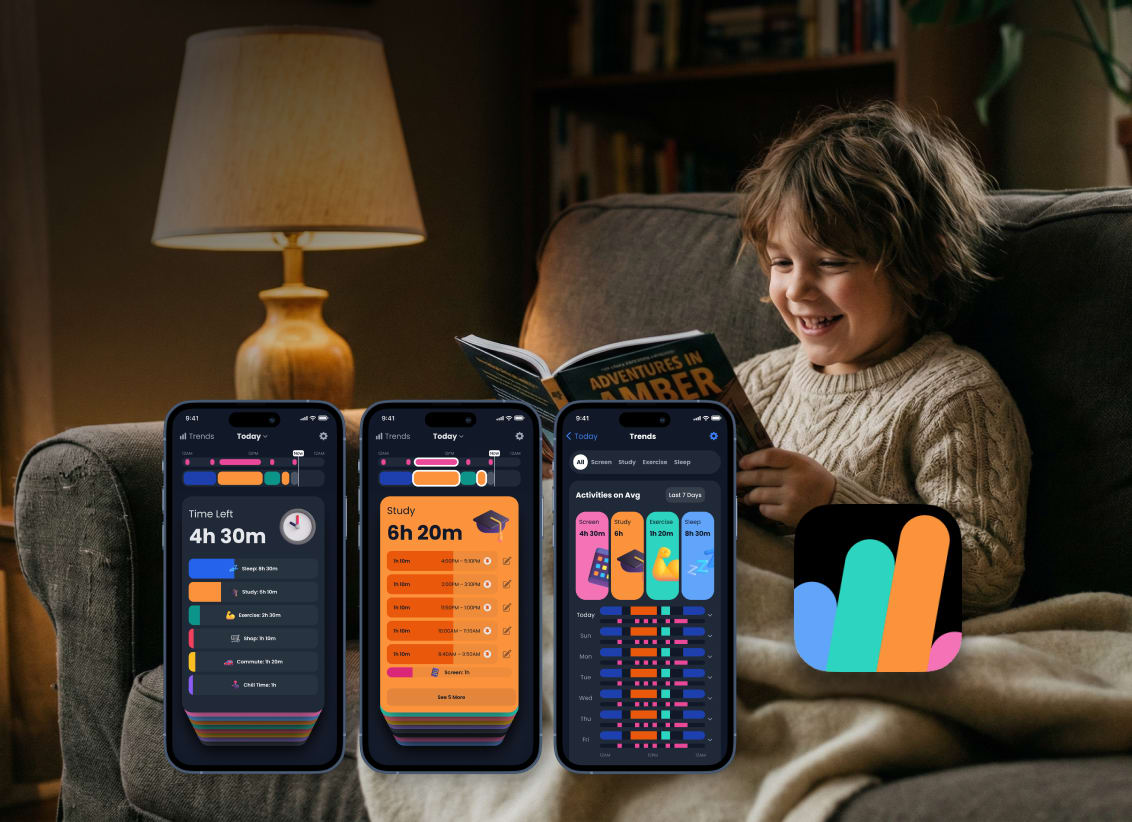
We built a two-layer solution. First, on-device classification analyzes screen time data locally and categorizes usage patterns. Second, for students who opt into the leaderboard, we implemented an OCR-based verification system. Students take screenshots of their Screen Time summary. The app processes these images on-device, extracts usage data, and submits only the relevant metrics for leaderboard ranking.
This creative workaround achieved 85% student opt-in. Students found the weekly competition engaging. One student consciously reduced social media time by 30% using the app's goal reminders. The system proved that privacy constraints can be navigation challenges rather than roadblocks when you design around platform capabilities.
Building Trust Through Transparency
We made the data flow visible to students and parents. The app shows exactly what information stays on-device versus what gets shared for leaderboards. This transparency built trust. Parents understood the privacy protections. Students felt in control of their participation.
Custom Phoneme Processing for Early Literacy
Standard speech recognition fails at phonemic awareness assessment. A kindergartener pronouncing individual letter sounds or blending phonemes produces audio that commercial APIs misinterpret. These are the foundational skills that predict reading success.
We built a custom phoneme processing library integrated with Azure Speech Services. The system analyzes pronunciation accuracy at the phoneme level, not just word recognition. It assesses whether a student correctly produces the /k/ sound in isolation, distinguishes between /b/ and /p/, and blends sounds into words.
This enabled accurate assessment of young children's reading skills at scale. Teachers previously spent hours conducting one-on-one assessments. The automated system provided continuous evaluation during practice activities, feeding data into the adaptive assessment engine.
The technical challenge involved training on child speech patterns, which differ significantly from adult speech in pitch, pronunciation consistency, and confidence. We tuned sensitivity thresholds to avoid penalizing developmentally appropriate variations while still catching genuine skill gaps.
Adaptive Assessment That Prevents Frustration
Traditional assessments test every item regardless of student performance. A struggling kindergartener faces 30 questions they cannot answer. An advanced student breezes through items far below their level. Both experiences waste time and miss instructional opportunities.
We engineered an adaptive assessment engine that individualizes testing in real-time. The system analyzes response patterns and adjusts difficulty dynamically. Struggling students end tests early before frustration sets in. Excelling students receive challenging items that identify their ceiling.
This created personalized learning paths for each student. The platform identifies specific skill gaps and serves targeted practice activities. A student struggling with short vowel sounds receives focused practice on that skill before advancing. A student who masters letter recognition moves directly to blending activities.
Teachers see continuous progress monitoring without waiting for formal test results. The system flags students needing intervention immediately. This supports Multi-Tiered System of Supports (MTSS) implementation with data-driven decision making rather than intuition.
Gamification That Drives Voluntary Engagement
Making screen time management feel like punishment guarantees failure with elementary students. We needed engagement strategies that made self-regulation intrinsically motivating.
The gamification engine combines individual goal-setting with social competition. Students set personal screen time targets and track progress toward goals. The weekly leaderboard creates friendly competition around who best manages their digital time. Progress unlocks achievements and visual rewards within the app.
This approach achieved over 85% opt-in rates for the leaderboard competition. Students voluntarily installed and used the app regularly. Teachers reported students discussing their screen time strategies and celebrating each other's progress.
The reading intervention side used similar mechanics. Letter recognition practice earned points. Phoneme blending challenges unlocked new content. The system made foundational skill-building feel like gameplay rather than drill work.
The Psychology of Self-Regulation
We designed around intrinsic motivation rather than external rewards. Students compete against their own baselines, not just peers. The app celebrates improvement, not just absolute performance. This builds self-efficacy and sustainable behavior change.
How it works
The details.
Keeping Student Data Private by Design
Building a reading and wellness app for young children means handling sensitive data carefully. Audio recordings of student voices, app usage patterns, and reading results all stay on the student's device. Only anonymous, summarised metrics leave the device for teacher dashboards. Students get instant feedback. Teachers get real-time progress updates. No sensitive data ever reaches cloud storage or third-party systems.
Getting Around Apple's Screen Time Limits
Apple does not allow apps to share screen time data off the device. We built a two-step workaround. First, the app analyses screen time locally and groups it by category. Second, for students who opt into the leaderboard, they take a screenshot of their Screen Time summary. The app reads that image on the device, pulls out the relevant numbers, and submits only those for ranking. This approach achieved 85% student opt-in. One student cut social media time by 30% using the app's goal reminders.
Showing Users What the App Does With Their Data
We made the data flow visible. The app shows students and parents exactly what stays on the device versus what gets shared for leaderboards. This transparency built trust and gave students a sense of control over their own information.
Speech Recognition Built for Young Children
Standard voice recognition fails with kindergarteners. Children pronounce sounds differently from adults, and standard tools are not trained on their voices. We built a custom system that listens at the level of individual sounds, not just words. It can tell whether a child correctly said the /k/ sound, and it was tuned to handle the normal variation in how young children speak without penalising developmentally appropriate differences.
Assessments That Stop Before Students Get Frustrated
Traditional tests ask every question regardless of how a student is doing. We built an assessment engine that adjusts in real time. If a student is struggling, the test ends early so they do not sit through questions they cannot answer. If a student is doing well, the system moves to harder items to find their ceiling. Teachers see progress without waiting for formal test results, and students who need extra help get flagged right away.
Making Self-Control Feel Like a Game
Telling children to manage their screen time does not work. We built a system that makes it feel like friendly competition. Students set personal goals, track their progress, and join a weekly leaderboard. Points and rewards came from meeting targets, not just from using the app. This drove over 85% voluntary participation. Students started talking about their screen time strategies with each other.
Motivation That Comes From Within
We designed the rewards system around personal improvement rather than just beating others. Students compete against their own past performance, not just their peers. The app celebrates getting better, which builds long-term habits rather than short-term bursts of activity.
Outcomes
What shipped.
The pilot deployment showed significant improvements in both literacy outcomes and digital wellness behaviors. 95% of kindergarten students knew all letters by end-of-year, compared to lower historical performance. Letter sound knowledge improved from 60% at program start to 85% knowing at least 20 sounds by mid-year. Student engagement remained high throughout the school year. Over 85% participated in weekly leaderboard competitions. Teachers reported the real-time progress monitoring changed their instructional approach. They identified struggling students earlier and adjusted teaching strategies based on specific skill gaps rather than general performance. The privacy-first architecture proved viable at scale. On-device processing handled the computational load without performance issues. Parents expressed confidence in the data protection approach. The platform demonstrated that student privacy and powerful analytics are not mutually exclusive. Looking forward, the goal is scaling this intervention approach to improve reading proficiency from 60% to 80-90% of third graders reading on grade level over multiple years of implementation.
95% letter recognition mastery by end-of-year
85% knowing at least 20 letter sounds by mid-year (up from 60%)
Over 85% student opt-in for leaderboard competitions
30% social media time reduction (student example)
Real-time progress monitoring for instructional adjustments
Key takeaways
What we learned.
- Platform API constraints require creative solutions, not compromises. We navigated Apple's Screen Time limitations using on-device classification and OCR-based verification, achieving 85% student opt-in while maintaining privacy compliance.
- Standard speech recognition cannot assess phonemic awareness in young children. Building custom phoneme processing enabled accurate evaluation of foundational reading skills that predict long-term literacy success.
- On-device processing with Core ML and Natural Language framework kept all sensitive student data local while delivering real-time feedback and analytics, proving privacy and functionality are compatible.
- Adaptive assessment prevents frustration and wasted time. Ending tests early for struggling students and advancing challenging items for excelling students created personalized learning paths that improved outcomes.
- Gamification drives voluntary engagement when designed around intrinsic motivation. Making screen time self-regulation feel like a challenge rather than punishment achieved over 85% student participation.
- Real-time progress monitoring enables immediate instructional adjustments. Teachers identified skill gaps and modified teaching strategies based on continuous assessment data rather than waiting for formal test results.
- Privacy transparency builds trust with parents and students. Showing exactly what data stays on-device versus what gets shared for leaderboards created confidence in a sector scrutinized for data practices.
In summary
Bottom line.
In summary, Alpha School's DreamLauncher platform demonstrates that privacy-first architecture and powerful educational outcomes are not competing priorities. As a result, by keeping sensitive student data on-device, building custom solutions for phonemic assessment, and designing around platform constraints, the system achieved 95% letter recognition mastery while maintaining complete data sovereignty. The combination of AI-powered early literacy intervention and gamified digital wellness created measurable improvements in both reading skills and screen time self-regulation. Furthermore, as edtech continues expanding into younger grades, this approach offers a blueprint for building student applications that earn parent trust while delivering results that matter for long-term academic success.
Key terms
Terms, defined.
- Phonemic Awareness
- Phonemic awareness is defined as the ability to identify and manipulate individual sounds (phonemes) in spoken words, and is the single strongest predictor of early reading success.
- On-Device AI Processing
- On-device AI processing refers to running machine learning models entirely on a user's local hardware without transmitting data to external servers, ensuring complete data sovereignty and privacy compliance.
FAQ
Frequently asked.
How did you work around Apple's Screen Time API limitations to enable data sharing?
What made the custom phoneme processing library necessary instead of standard speech recognition?
How does on-device processing maintain student privacy while still providing useful analytics?
What engagement strategies made 85% of students opt into the screen time leaderboard?
How does early literacy intervention in kindergarten compare to remediation in later grades?
What were the biggest technical challenges in building speech recognition for young children?
How does the solution integrate with existing school systems and curriculum?
What results have AI reading tutors shown in controlled studies?
Let's talk
Bring us the hard problem.
We'll bring the team that ships.